
Monday, June 25, 2007


Wednesday, June 06, 2007
A funny translation from English to Lolcat
If you don't understand lolcat, Anil Dash's "I can has grammar" might help.
Once you have that as a foundation, Francis Heaney's translation to this version of "This is just to say" is very funny!
Thanks Francis, that made my day! And I love The Holy Tango of Literature by the way.
Once you have that as a foundation, Francis Heaney's translation to this version of "This is just to say" is very funny!
oh hai
you had some plums
but I eated them
I is sorry
they had a flavor
Thanks Francis, that made my day! And I love The Holy Tango of Literature by the way.
Monday, June 04, 2007
Translator Interviews in The Quarterly Conversation
C.M. Mayo, Chris Andrews, and Natasha Wimmer are each interviewed in the new issue of The Quarterly Conversation.
Saturday, May 12, 2007
Alicia Borinsky's "Golpes Bajos / Los Blows" Translated by Cola Franzen & the Author

is a collection of stories set in Buenos Aires and it is fantastic. Writes Julio Ortega, "A Masterpiece of irony." Writes Marguerite Feitlowitz, "No one working today writes like Alicia Borinsky, whose words explode off the page." I could not have said it better. I have long been an admirer of both Borinsky, and Franzen, who is one of the most dedicated, original and elegant literary translators working today. Suffice it to say that Franzen won the 2004 PEN Literary Award and the Gregory Kolovakos Award.
(Full disclosure: some of Borinsky's poem with Franzen's translations are in Tameme's premier issue. The third issue, "Reconqusita," features a switcheroo: Franzen translated by Borinsky.)
For more about the extraordinary Golpes Bajos / Low Blows, click here or visit the book's site at the University of Wisconsin Press.
Friday, April 13, 2007
Swedish Government Commits Literary Suicide
The Swedish Insitute in Stockholm has announced that they are cutting off all subsidies for literary translation of Swedish literature effective immediately.
For the past two years, there has been a great deal of wrangling within various departments of the Swedish government as to which department should pay for literary translation subsidies.
It seems that the Swedes have decided the best way to settle the matter is to cut off all subsidies entirely, making Sweden one of the few European governments to have no support of its national literature abroad, except for what the market can carry on its own.
Luckily for Sweden, they have a number of renowned mystery authors to carry the Swedish flag on the international scene for the time being.
It also appears that the Swedish government is unaware of market forces on the translator's end of the deal. From underpaid to unpaid is a great leap backward, and many translators of Swedish here in the United States at least are also quite good at translating Norwegian, Danish and German. All of these countries are strong about their national literature and support translators well.
In an article in Svenska Dagbladet, it appears that the present director of the Swedish Institute was under the impression that the subsidy went to advertising and marketing, and was not the base pay of the translator. How uninformed can a person be?
As a Swedish-American, I am ashamed of this lack of pride in the national literature, and as an American, I am ashamed of the lack of support for foreign literatures in general which would perhaps have made this question moot. But if neither the Americans nor the Swedes want to pay for Swedish literature to be translated into English or other languages, why should we the translator have to do the work for free? Even an idealistic translator with a Ph D has a rather nasty habit of eating, and some of us must even feed children on what we earn. As I've said, thank God for mysteries, or yours truly would have already left this profession years ago.
For the past two years, there has been a great deal of wrangling within various departments of the Swedish government as to which department should pay for literary translation subsidies.
It seems that the Swedes have decided the best way to settle the matter is to cut off all subsidies entirely, making Sweden one of the few European governments to have no support of its national literature abroad, except for what the market can carry on its own.
Luckily for Sweden, they have a number of renowned mystery authors to carry the Swedish flag on the international scene for the time being.
It also appears that the Swedish government is unaware of market forces on the translator's end of the deal. From underpaid to unpaid is a great leap backward, and many translators of Swedish here in the United States at least are also quite good at translating Norwegian, Danish and German. All of these countries are strong about their national literature and support translators well.
In an article in Svenska Dagbladet, it appears that the present director of the Swedish Institute was under the impression that the subsidy went to advertising and marketing, and was not the base pay of the translator. How uninformed can a person be?
As a Swedish-American, I am ashamed of this lack of pride in the national literature, and as an American, I am ashamed of the lack of support for foreign literatures in general which would perhaps have made this question moot. But if neither the Americans nor the Swedes want to pay for Swedish literature to be translated into English or other languages, why should we the translator have to do the work for free? Even an idealistic translator with a Ph D has a rather nasty habit of eating, and some of us must even feed children on what we earn. As I've said, thank God for mysteries, or yours truly would have already left this profession years ago.
Wednesday, April 04, 2007
Brooklyn Rail's "In Translation"
Check out Brooklyn Rail's new web-only section "In Translation" which features translated works of short fiction, excerpted longer fiction, and excerpted dramatic writing. According to the the editors, "In Translation will serve as a venue for outstanding literary translation, and we hope that it will become a valuable resource for translators, authors, editors, and publishers seeking to collaborate. "
Thursday, March 15, 2007
AWP Bookfair: Margaret Sayers Peden, Jen Hofer, Meena & More

Just back from the AWP bookfair in Atlanta-- so much to blog about! One of the books I was most excited to see is the gorgeous and essential new anthology edited by Margaret Sayers Peden, Mexican Writers on Writing. (Trinity University Press). It includes essays by Sor Juana Ines de la Cruz, Rosario Castellanos, Angeles Mastretta, Juan Villoro, Pedro Angel Palou, Carlos Fuentes, Octavio Paz, Ilan Stavans, Juan Villoro, and Jorge Volpi, in addition to a dozen others. The cover painting is "Our Dream" by Mexican artist Alfredo Castaneda. (Peden and Castaneda have collaborated on another book: read about that here.) I also got a copy Jen Hofer's hot off the presses translation of Laura Solorzano's poems Lobo de labio as Lip Wolf (Action Books). (Check out the Action Books manifesto: "We're not so interested in tchotschkes from the style-mart".) Monica del la Torre's blurb for Lip Wolf: "Readers beware. You are about to go into the lion's den." Also at the bookfair--- in fact, the table right next to mine (Tameme)--- was Meena, the bilingual Arabic/ English literary journal edited by Andrea Young and Khaled Hegazzi. They've just brought out their fascinating second issue. Meena means "port" in Arabic. More anon.
Wednesday, March 14, 2007
SASS and STiNA
The Society for the Advancement of Scandinavian Studies (SASS) will be having its annual conference in Rock Island, Illinois on 26-28 April 2007. Presenters have been chosen and the program is listed on their website. For the third time, the Association of Swedish Translators in North America (STiNA: www.swedishtranslators.org ) will be sponsering a panel on Swedish literary translation issues. Speakers include Johannes Göransson, Eva Alison, Margareta Horiba, Erland Anderson and STiNA president, Paul Norlen.
STiNA was founded on March 18th, 2004, by Paul Norlen and myself, Laura A. Wideburg, and has now grown to a membership of 36 in its third year. We keep translators of literary Swedish informed of events in North America, search for information on grants of relevance to Swedish translators, updates on the Gothenburg Book Fair, and especially work on providing assitence to translators just entering the field. For me, personally, it has been amazing to be on the ground floor of an association that has proved its usefulness both in North America and in Sweden. As we enter our fourth year, I look back on the accomplishments we made: three translation panels at SASS, a number of presentations at ALTA 2006, and contacts with the Swedish Institute, the Swedish Consulate in New York, which provided start-up funds during our second year, and the Swedish Authors Union. We will also be co-sponsering the Seattle leg of a three-city trip by four renowned Swedish mystery authors this April and May.
STiNA was founded on March 18th, 2004, by Paul Norlen and myself, Laura A. Wideburg, and has now grown to a membership of 36 in its third year. We keep translators of literary Swedish informed of events in North America, search for information on grants of relevance to Swedish translators, updates on the Gothenburg Book Fair, and especially work on providing assitence to translators just entering the field. For me, personally, it has been amazing to be on the ground floor of an association that has proved its usefulness both in North America and in Sweden. As we enter our fourth year, I look back on the accomplishments we made: three translation panels at SASS, a number of presentations at ALTA 2006, and contacts with the Swedish Institute, the Swedish Consulate in New York, which provided start-up funds during our second year, and the Swedish Authors Union. We will also be co-sponsering the Seattle leg of a three-city trip by four renowned Swedish mystery authors this April and May.
Sunday, February 25, 2007
Announcing the Publication of the First Tameme Chapbook ~ Cuaderno
 The first Tameme chapbook ~ cuaderno is out: "Carne verde, piel negra ~ An Avocado from Michoacán" por ~ by Agustín Cadena (Translation: C.M. Mayo) A story by the winner of Mexico's San Luis Potosí Award for the Short Story. English and Spanish side-by-side. Includes interview with the author and translator's notes.Agustín Cadena was born in 1963 in the Valle del Mezquital, Mexico. Poet, fiction writer, essayist, and translator, Cadena has published more than twenty books in these genres and received numerous national awards, fellowships and other recognition for his literary work. His most recent book is Los pobres de espíritu, which won Mexico's San Luis Potosí National Prize for Fiction. His writing has been translated into English, Italian and Hungarian as well as adapted for radio and television. He currently teaches a seminar on Mexican culture and literature at the University of Debrecen, in Hungary.C.M. Mayo is founding editor of Tameme, editor of Mexico: A Traveler's Literary Companion, and author of Miraculous Air and Sky Over El Nido, which was translated by Agustín Cadena as El cielo de El Nido.
Read an interview with Agustin Cadena here.
About Tameme: Tameme, Inc. is a nonprofit foundation based in the state of California. Tameme's mission is to promote English-to-Spanish and Spanish-to-English literary translation of new writing from North America— Canada, the U.S., and Mexico. Tameme Chapbooks ~ Cuadernos, celebrate and disseminate this new writing and translation in an attractive and affordable format. Tameme's Inc. first publication was the now at-rest Tameme literary journal (1999-2003). Tameme was widely lauded for the quality of its selections and translations. Its U.S.contributors included outstanding writers and poets such as A. Manette Ansay, Gloria Anzaldúa, Edwidge Danticat, Charles Simic, and Eliot Weinberger; Candians included Margaret Atwood, Douglas Glover, Farley Mowat, and P.K. Page; and Mexicans included Alberto Blanco, Jaimes Sabines, Fabio Morábito, Coral Bracho, Pura López Colomé, Ilán Stavans, and Juan Villoro. The last two issues, "Sun and Moon/ Sol y luna" and "Reconquest/ Reconquista," published in 2001 and 2003 respectively, were made possible by a grant from the U.S.-Mexico Fund for Culture.
"Tameme" — pronounced "ta-meh-meh"— is a Nahuatl (Aztec) word which means "porter" or "messenger."
The chapbook is available from Tameme and will be at the Tameme table in the AWP bookfair later this week.
Wednesday, February 14, 2007

Monday, February 12, 2007
AWP Bookfair
The Associated Writing Programs conference, aka mega-powow, is coming up in Atlanta Georgia this Feb 28-March 3rd. There will be numerous literary translation panels and events. The bookfair has a long list of exhibitors, including Tameme Chapbooks ~ Cuadernos which will be at table # 239--- if you're at the conference, please be sure to come on by. I'll also be participating on Mark Statman's panel with Zack Rogow and others, "Translation as Collaboration (with the Living & the Dead" Friday March 2nd at 10:30-11:45 am. More anon.
Thursday, January 04, 2007
Banff Centre Residencies - deadline coming up
The deadline is coming up soon, January 12, to apply for a literary translation residency at the Banff International Literary Translation Centre.
You can download the application information from the Banff site. Good luck!
It looks like a great resource for literary translators and authors who want to work closely with their translators. Note that the guidelines require applicants to have already published at least one book.The primary focus of the residency program is to afford literary translators a period of uninterrupted work on a current project, within an international community of translators. Translators may request a joint residency (of up to one week) with a writer, allowing the translator to consult and deepen his or her knowledge of the writer’s intentions and the context of the work being translated. Consultation with the program director and experienced translators in residence as faculty will be available. Three or four times a week participants gather for readings by invited writers and informal presentations by faculty, or simply to exchange information and discuss their work in progress.
The program is open to literary translators from Canada, Mexico and the United States translating from any language, and to international translators working on literature from the Americas (both the North and South American continents).
You can download the application information from the Banff site. Good luck!
Tuesday, January 02, 2007
Cherokee Translation of Thirteen Moons
Charles Frazier's Thirteen Moons is scheduled to be translated into Cherokee, according to an interview with Frazier that appeared in the Seattle P-I last month.
It is supposed to be one of the first major translations into Cherokee in over 100 years. The article did not mention who the translator would be, and I am curious to know what the process would be like.
I think it would be a great service if ALTA could become more involved with Native languages spoken in this hemisphere and see if there is a way to support translators working to and from Native languages. It would be fantastic if there would be a panel on Native languages at upcoming ALTA conferences. It was something I could only dream about when I was hosting the conference last year, and I hope that those of you who are thinking of hosting in the coming years would be able to find a way to forge the connections that would make this a reality.
It is supposed to be one of the first major translations into Cherokee in over 100 years. The article did not mention who the translator would be, and I am curious to know what the process would be like.
I think it would be a great service if ALTA could become more involved with Native languages spoken in this hemisphere and see if there is a way to support translators working to and from Native languages. It would be fantastic if there would be a panel on Native languages at upcoming ALTA conferences. It was something I could only dream about when I was hosting the conference last year, and I hope that those of you who are thinking of hosting in the coming years would be able to find a way to forge the connections that would make this a reality.
Thursday, December 28, 2006
Translation journal call for submissions
Call for Submissions
Translating in the 21st Century
TRANSLATION is a new Translation Studies journal at the University of California Santa Barbara published every two years by the Translation Studies Research Focus Group of the Interdisciplinary Humanities Center at UCSB.
http://www.ihc.ucsb.edu/research/translation/journal.html
TRANSLATION is now accepting submissions of poetry or short fiction translations into English for its second issue, to be published in Fall 2007. Essays on literary translation are also welcome. Issue two will highlight translations addressing cultures around the world -- East and West. We are
particularly interested in translations from non-Western languages, but are happy to consider all submissions.
GUIDELINES
Only unpublished translations will be accepted. The journal is collaboratively run by graduate students and faculty, and welcomes translations from both new and established translators. Please email a brief bio of the translating author along with your submission to ucsbtranslation@gmail.com.
All submissions should use current MLA formatting where required.
Poetry submissions should be limited to 3 per entrant. Poetry translations may be to or from English and should be submitted along with the original text for side-by-side publication.
For short fiction submissions, 7-10 pages is the preferred length.
Translators should obtain necessary permissions for translating texts and will be expected to assist in obtaining permission for publication of originals in the case of poetry.
Unfortunately, as a non-profit, scholarly journal, we cannot offer payment for submissions.
DEADLINE
Submissions will be accepted through January 10, 2007 at ucsbtranslation@gmail.com
Translating in the 21st Century
TRANSLATION is a new Translation Studies journal at the University of California Santa Barbara published every two years by the Translation Studies Research Focus Group of the Interdisciplinary Humanities Center at UCSB.
http://www.ihc.ucsb.edu/research/translation/journal.html
TRANSLATION is now accepting submissions of poetry or short fiction translations into English for its second issue, to be published in Fall 2007. Essays on literary translation are also welcome. Issue two will highlight translations addressing cultures around the world -- East and West. We are
particularly interested in translations from non-Western languages, but are happy to consider all submissions.
GUIDELINES
Only unpublished translations will be accepted. The journal is collaboratively run by graduate students and faculty, and welcomes translations from both new and established translators. Please email a brief bio of the translating author along with your submission to ucsbtranslation@gmail.com.
All submissions should use current MLA formatting where required.
Poetry submissions should be limited to 3 per entrant. Poetry translations may be to or from English and should be submitted along with the original text for side-by-side publication.
For short fiction submissions, 7-10 pages is the preferred length.
Translators should obtain necessary permissions for translating texts and will be expected to assist in obtaining permission for publication of originals in the case of poetry.
Unfortunately, as a non-profit, scholarly journal, we cannot offer payment for submissions.
DEADLINE
Submissions will be accepted through January 10, 2007 at ucsbtranslation@gmail.com
Technorati Tags: literature, poetry, translation
Sunday, December 03, 2006
Translation Workshop in Umbria, Italy
Here's a translation workshop that might be of interest to ALTA members or other translators and writers.
Writing and Translation Workshop
in Umbria, Italy
directed by Inara Cedrins
Stay in a spacious farmhouse with interior design typical of the region: stone walls, wooden beams, wrought iron beds and hand-crafted Umbrian furniture. Our rooms form a separate apartment with a well-equipped kitchen. Horseback or donkey riding available, hiking in the Sybillini Mountains – swimming pool and an excellent restaurant offering regional cuisine on the premises. Grounds compose ten hectares where organic farming is practiced.
Workshop sessions and seminars will be conducted in English; translate from any language into English, and receive feedback. Come with your translator for a productive week! If you or your partner are artists, bring a field easel and paint plein-air in the medieval villages or this stunning landscape.
Optional excursions to: Assisi, Spoleto, Norcia, Castelluccio, Orvieto, Perugia
Two sessions:
May 27 – June 3
June 17 – 24
500 Euro per person, based on double occupancy
Reserve by February
Special group rate flying from Riga:
request details – Stipends Available
Technorati Tags: translation, writing
Monday, November 27, 2006
Center for Art in Translation San Francisco Reading Nov 29th
From the Center for Art in Translation:
The Center for the Art of Translation will be cosponsoring, Enemy Nations, Emerging Voices, a reading at the SF Main Library.
This provocative reading features works from two new Words Without Borders anthologies: Literature from the Axis of Evil and Let Me Tell You Where I've Been: New Writing by Women of the Iranian Diaspora. These works celebrate the literature and humanity from so-called "enemy" nations and cultures. The event includes an appearance by special guest Alice Walker. We are proud to co-sponsor this event with Words Without Borders.
Wednesday November 29, 2006 6-8 pm (free)
San Francisco Main Library Auditorium
100 Larkin Street, San Francisco
Friday, November 24, 2006
The Bandits from Rio Frio: A Naturalistic and Humorous novel of Customs, Crimes and Horrors
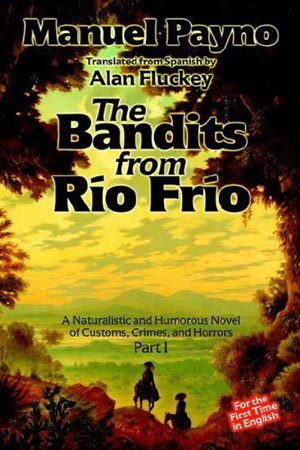 Manuel Payno's 19th century classic, The Bandits from Rio Frio: A Naturalistic and Humorous novel of Customs, Crimes and Horrors, has been translated for the first time into English by Alan Flukey (Heliographica Press, 2005). It would be fair to call Payno Mexico's Dickens. The Bandits from Rio Frio is a major work-- and the translation is superb. Read a review over at River Walk Journal Blog, and another at Eco Latino. This translation should have gotten a lot more attention than it has.
Saturday, November 18, 2006
Blurring Boundaries: A Conversation on the Art of Translation
Last night, I attended the closing event of the Festival of Contemporary Japanese Women Poets, a series of talks and readings presented by belladonna*, Poets House, and the Bowery Poetry Club. The conversation began as an exchange of ideas and questions between Alcalá, Sekiguchi and Swensen and continued with the audience Q&A. I was introduced to Sekiguchi's work on Wednesday but last night she elaborated further on her experiences in and thoughts on self-translation. Swensen, also a well-regarded poet, translated into English Sekiguchi's Japanese to English self-translations and has translated a number of French works, focusing in particular on cross-genres. She currently teaches at the University of Iowa. Her comments addressed the role and influence of translation on a poet's "original writing." ALTA veteran Rosa Alcalá, who teaches in a bilingual MFA program at the University of Texas, El Paso, opened the conversation with an observation on the creative potential of borders and boundaries: "While some boundaries are an invention, others are real. Placing ourselves on those boundaries can be productive." Ultimately, the poets seemed to agree that in writing and translation, one does not necessarily "blur boundaries" but rather acknowledge, embrace and inhabit them as sites of creativity and meaning.
You can read my notes of the discussion on my website (they were far too long to reproduce here!).
You can read my notes of the discussion on my website (they were far too long to reproduce here!).
Friday, November 17, 2006
The Kommandant -- A Trilingual Reading of Les Bienveillantes
Right after the ALTA conference, two things happened. A big thick plop on my front porch from Amazon France containing Les Bienveillantes by Jonathan Littel, which has been the most discussed book of the summer in Western Europe it appears, and I, now the former host committee chair, got sick. The fact that I had to spend two weeks more or less resting up made opening Les Bienviellantes possible (894 pages is intimidating in any language), and once I started, I was hooked. The novel is unsettling, and extremely disturbing, but I was also disturbed in a linguistic way.
Now the Trilingual Reading languages: First, Jonathan Littel is an American writing in French. Not only does he write in French, he does it very well, and has won the 2006 Prix Goncourt (the French Pulitzer, so to speak). Second, the book is about a German, albeit with a French mother, which means that the world of the main character is already a "translation" from the German language and thought world into the French. And third, of course, is that the author and I share the same mother tongue, American English. There is a kind of perverse pride that one of "those Americans" has the ability to write a novel that can stand next to Victor Hugo without shame.
Now the story is jarring enough, even if one has read a great deal of Holocaust literature. Most of my reading in the field has been in German, and seeing events through the medium of the French language made the telling almost a Brechtian Verfremdungseffekt, distancing me as the reader from the experiences in which I already have extensive German vocabulary and knowledge. But this Verfremdungseffekt made the story even more ghastly, except for one little, little problem (no pun intended, actually. No really!).
German is a language of case, and English and French, with some exceptions in the pronoun arena, are not. Littel has chosen to use many German words and expressions in this work, der Kommandant being one of many, and I almost would have preferred to have the French. Why? Each time a German word was used with its nominative "the", in a place where the sentence has the word in what would be a direct or an indirect object, I was jerked right out of the story and into German 101 teaching assistent mode. Quite frankly, this is not my favorite persona. Nothing is misspelled nor are the words in the wrong context -- the use of the German vocabulary is flawless in all ways except for the case system problem. If I did not know German, I am sure that I would be captured by Littel's use of German for good effect, but the effect is lost when the case is wrong and the reader knows it. This could have been avoided entirely by using "le Kommandant" for example, which would make the case system discussion irrelevant. But "der" where "den" or "dem" should be used? If I were a cat, my fur is being rubbed the wrong way each and every time it happens. I wonder if this is my emotional way of distancing myself from the Arendtian "banality of evil" in the text itself, by letting myself be distracted by improper use of case. But I am distracted, in a red-pennish sort of way, and that makes me irritated, and then I wonder what the editor knew of German, or if Littel was aware of the case system but decided to ignore it, and then I am off into the kinds of tangents that sociolinguists tend to wander. What does the use of German mean? Why is Littel using this German expression here, but a French translation here? How many doctoral dissertations are going to be written on this?
Well, I did get better, and I am nearing the end of "Les Bienviellantes" (the title proposal for English is "The Kindly Ones" though I think that "Men of Good Will" would make a beautifully ironic title, though the title refers to the Furies in French.) If you know French, do try and read it, but I would put a disclaimer here as well, because at times you will find yourself in a position of voyeur to sadism and murder, and this reader often felt like a minor character found in the first hundred pages, who, when faced with the initial cruelty of the German invasion of the Ukraine, went completely insane. Under the circumstances, of course, perhaps he was the sanest of them all. As the protagonist keeps going through this "docu-roman", the horrors (and perversions) become a bit much, and this reader was glad to have been born far far away from the countries of my maternal ancestors.
Now the Trilingual Reading languages: First, Jonathan Littel is an American writing in French. Not only does he write in French, he does it very well, and has won the 2006 Prix Goncourt (the French Pulitzer, so to speak). Second, the book is about a German, albeit with a French mother, which means that the world of the main character is already a "translation" from the German language and thought world into the French. And third, of course, is that the author and I share the same mother tongue, American English. There is a kind of perverse pride that one of "those Americans" has the ability to write a novel that can stand next to Victor Hugo without shame.
Now the story is jarring enough, even if one has read a great deal of Holocaust literature. Most of my reading in the field has been in German, and seeing events through the medium of the French language made the telling almost a Brechtian Verfremdungseffekt, distancing me as the reader from the experiences in which I already have extensive German vocabulary and knowledge. But this Verfremdungseffekt made the story even more ghastly, except for one little, little problem (no pun intended, actually. No really!).
German is a language of case, and English and French, with some exceptions in the pronoun arena, are not. Littel has chosen to use many German words and expressions in this work, der Kommandant being one of many, and I almost would have preferred to have the French. Why? Each time a German word was used with its nominative "the", in a place where the sentence has the word in what would be a direct or an indirect object, I was jerked right out of the story and into German 101 teaching assistent mode. Quite frankly, this is not my favorite persona. Nothing is misspelled nor are the words in the wrong context -- the use of the German vocabulary is flawless in all ways except for the case system problem. If I did not know German, I am sure that I would be captured by Littel's use of German for good effect, but the effect is lost when the case is wrong and the reader knows it. This could have been avoided entirely by using "le Kommandant" for example, which would make the case system discussion irrelevant. But "der" where "den" or "dem" should be used? If I were a cat, my fur is being rubbed the wrong way each and every time it happens. I wonder if this is my emotional way of distancing myself from the Arendtian "banality of evil" in the text itself, by letting myself be distracted by improper use of case. But I am distracted, in a red-pennish sort of way, and that makes me irritated, and then I wonder what the editor knew of German, or if Littel was aware of the case system but decided to ignore it, and then I am off into the kinds of tangents that sociolinguists tend to wander. What does the use of German mean? Why is Littel using this German expression here, but a French translation here? How many doctoral dissertations are going to be written on this?
Well, I did get better, and I am nearing the end of "Les Bienviellantes" (the title proposal for English is "The Kindly Ones" though I think that "Men of Good Will" would make a beautifully ironic title, though the title refers to the Furies in French.) If you know French, do try and read it, but I would put a disclaimer here as well, because at times you will find yourself in a position of voyeur to sadism and murder, and this reader often felt like a minor character found in the first hundred pages, who, when faced with the initial cruelty of the German invasion of the Ukraine, went completely insane. Under the circumstances, of course, perhaps he was the sanest of them all. As the protagonist keeps going through this "docu-roman", the horrors (and perversions) become a bit much, and this reader was glad to have been born far far away from the countries of my maternal ancestors.
Four From Japan: Contemporary Poetry & Essays by Women
As a follow-up to Liz's post on Wednesday's event at Poet's House, I wanted to share my first thoughts on the anthology Four From Japan: Contemporary Poetry & Essays by Women, which I have been rereading since that night. I am cross-posting this entry from my website, Stingy Kids. I also took some notes on the panel discussion but they are nowhere near as comprehensive as Liz's!
My post begins:
Belladonna*, Poets House, and the Bowery Poetry Club have organized a three-day festival on "contemporary and innovative" Japanese womens poetry. The impetus for this event is the recent publication of the anthology Four From Japan: Contemporary Poetry & Essays by Women (Litmus/Belladonna), which features the work of Kiriu Minashita, Kyon-Mi Park, Ryoko Sekiguchi, Takako Arai in English translation (most of the translations are by Sawako Nakayasu, editor of Factorial). I purchased a copy last night, the first night of the festival, and devoured most of it on my subway ride home. The translations are spectacular and I admire the decision to include the Japanese originals, even if doing so meant that fewer poems could be included. An essay by each poet follows the selection of poems and these provide a further glimpse into the different ways in which issues of idenitity, language, and representation have affected and shaped their individual work. These essays do some of the work that readers have come to expect from an introduction, but rather than have the translator and/or editor speak for the poets and "group" their work in collective terms, the anthology insists on a multiplicity of voices moving in and out of private and public positions.
I was interested in the decision to present the poems first in translation and follow these with the original Japanese text. I often prefer original and translation to face each other, but letting the translation "speak" first, as it were, is very provocative. I began my reading of these texts in a language that is known to me, even the language tricks and contortions they perform are familiar, so for a moment they belong to me: I can domesticate them, incorporate them, ingest them. I turn the page and, suddenly, I am facing another language and my grasp on these texts begins to slip away. But what also intrigued me is how the translations continued to shadow these originals so that they too could be "read" in a way but without the illusion of fluidity that facing translations encourage. Though this is a spare work, its reach is expansive and aspires "to seep [the work of these poets] out further into a universal poetic" while keeping their individual contexts in view. The prose texts, I would argue, are a defense against the risk of over generalizing and globalizing these works. They give us a glimpse into the influences and experiences that have shaped these authors and further elaborate their individual poetic interests and concerns.
Full volumes of translations of the individual poets are in order and I hope this collection inspires this future work, but last night's dialogue at Poets House also underscored the importance of gathering different voices together. As the conversation progressed it became clear that there were no easy categories in which to collectively position these writers. Even the category "women" found itself challenged and placed under scrutiny.
End of original post.
Since writing this, I've had the chance to read more attentively the poems and prose, particularly Kyong-Mi Park's essay "My Asian Bones are Ringing," which begins on a winter day in New York. The following passage is just stunning:
My post begins:
Belladonna*, Poets House, and the Bowery Poetry Club have organized a three-day festival on "contemporary and innovative" Japanese womens poetry. The impetus for this event is the recent publication of the anthology Four From Japan: Contemporary Poetry & Essays by Women (Litmus/Belladonna), which features the work of Kiriu Minashita, Kyon-Mi Park, Ryoko Sekiguchi, Takako Arai in English translation (most of the translations are by Sawako Nakayasu, editor of Factorial). I purchased a copy last night, the first night of the festival, and devoured most of it on my subway ride home. The translations are spectacular and I admire the decision to include the Japanese originals, even if doing so meant that fewer poems could be included. An essay by each poet follows the selection of poems and these provide a further glimpse into the different ways in which issues of idenitity, language, and representation have affected and shaped their individual work. These essays do some of the work that readers have come to expect from an introduction, but rather than have the translator and/or editor speak for the poets and "group" their work in collective terms, the anthology insists on a multiplicity of voices moving in and out of private and public positions.
I was interested in the decision to present the poems first in translation and follow these with the original Japanese text. I often prefer original and translation to face each other, but letting the translation "speak" first, as it were, is very provocative. I began my reading of these texts in a language that is known to me, even the language tricks and contortions they perform are familiar, so for a moment they belong to me: I can domesticate them, incorporate them, ingest them. I turn the page and, suddenly, I am facing another language and my grasp on these texts begins to slip away. But what also intrigued me is how the translations continued to shadow these originals so that they too could be "read" in a way but without the illusion of fluidity that facing translations encourage. Though this is a spare work, its reach is expansive and aspires "to seep [the work of these poets] out further into a universal poetic" while keeping their individual contexts in view. The prose texts, I would argue, are a defense against the risk of over generalizing and globalizing these works. They give us a glimpse into the influences and experiences that have shaped these authors and further elaborate their individual poetic interests and concerns.
Full volumes of translations of the individual poets are in order and I hope this collection inspires this future work, but last night's dialogue at Poets House also underscored the importance of gathering different voices together. As the conversation progressed it became clear that there were no easy categories in which to collectively position these writers. Even the category "women" found itself challenged and placed under scrutiny.
End of original post.
Since writing this, I've had the chance to read more attentively the poems and prose, particularly Kyong-Mi Park's essay "My Asian Bones are Ringing," which begins on a winter day in New York. The following passage is just stunning:
There's no such thing as your "own" language. Words that we call words all belong to others. To speak and write, and to learn and comprehend words--it is all a matter of giving yourself over to the process of other people's words as they come and go freely within you, and placing your own self atop the words of someone else. What I discovered through my own personal experience of translating Stein, the mother of modernism, was the spell-like quality of words, that language was in fact a medium--a spiritual medium as well as an intermediary--and that the act of using words is that of being possessed by the words of someone else.During the panel discussion, Ryoko Sekiguchi told us that she is often asked, "why are you writing in French, Japan wasn't a colony of France?" Her reply: "The question becomes: what is wrong with engaging in a language to which you have no historical connection?" This brought up for me the issues surrounding the argument that translators should only translate into and out of languages they know intimately or to which they are legitimately bound by history. But history becomes a tricky prescription for writing and translation when you think of all of the unwritten contacts and encounters that have occurred between people and languages over time. Not to mention how much would be left untranslated if we only dealt in recent historical connections or with languages we know. Arguably, the act of translation creates these connections and this knowing.
(In this sense, it really makes no sense to speak of a "native" language. There is no language we are born with. Children are possessed, like a medium, by the language of whoever they first meet in their lives, and then copy and repeat this process, placing themselves atop it.)
Subscribe to:
Posts (Atom)