Sunday, February 25, 2007

Announcing the Publication of the First Tameme Chapbook ~ Cuaderno

The first Tameme chapbook ~ cuaderno is out: "Carne verde, piel negra ~ An Avocado from Michoacán" por ~ by Agustín Cadena (Translation: C.M. Mayo) A story by the winner of Mexico's San Luis Potosí Award for the Short Story. English and Spanish side-by-side. Includes interview with the author and translator's notes.Agustín Cadena was born in 1963 in the Valle del Mezquital, Mexico. Poet, fiction writer, essayist, and translator, Cadena has published more than twenty books in these genres and received numerous national awards, fellowships and other recognition for his literary work. His most recent book is Los pobres de espíritu, which won Mexico's San Luis Potosí National Prize for Fiction. His writing has been translated into English, Italian and Hungarian as well as adapted for radio and television. He currently teaches a seminar on Mexican culture and literature at the University of Debrecen, in Hungary.C.M. Mayo is founding editor of Tameme, editor of Mexico: A Traveler's Literary Companion, and author of Miraculous Air and Sky Over El Nido, which was translated by Agustín Cadena as El cielo de El Nido.

Read an interview with Agustin Cadena here.

About Tameme: Tameme, Inc. is a nonprofit foundation based in the state of California. Tameme's mission is to promote English-to-Spanish and Spanish-to-English literary translation of new writing from North America— Canada, the U.S., and Mexico. Tameme Chapbooks ~ Cuadernos, celebrate and disseminate this new writing and translation in an attractive and affordable format. Tameme's Inc. first publication was the now at-rest Tameme literary journal (1999-2003). Tameme was widely lauded for the quality of its selections and translations. Its U.S.contributors included outstanding writers and poets such as A. Manette Ansay, Gloria Anzaldúa, Edwidge Danticat, Charles Simic, and Eliot Weinberger; Candians included Margaret Atwood, Douglas Glover, Farley Mowat, and P.K. Page; and Mexicans included Alberto Blanco, Jaimes Sabines, Fabio Morábito, Coral Bracho, Pura López Colomé, Ilán Stavans, and Juan Villoro. The last two issues, "Sun and Moon/ Sol y luna" and "Reconquest/ Reconquista," published in 2001 and 2003 respectively, were made possible by a grant from the U.S.-Mexico Fund for Culture.

"Tameme" — pronounced "ta-meh-meh"— is a Nahuatl (Aztec) word which means "porter" or "messenger."

The chapbook is available from Tameme and will be at the Tameme table in the AWP bookfair later this week.

Wednesday, February 14, 2007

Welcome Calque!

A new journal of literary translation: Calque. Translators: Calque has a call for submissions.

Monday, February 12, 2007

AWP Bookfair

The Associated Writing Programs conference, aka mega-powow, is coming up in Atlanta Georgia this Feb 28-March 3rd. There will be numerous literary translation panels and events. The bookfair has a long list of exhibitors, including Tameme Chapbooks ~ Cuadernos which will be at table # 239--- if you're at the conference, please be sure to come on by. I'll also be participating on Mark Statman's panel with Zack Rogow and others, "Translation as Collaboration (with the Living & the Dead" Friday March 2nd at 10:30-11:45 am. More anon.

Thursday, January 04, 2007

Banff Centre Residencies - deadline coming up

The deadline is coming up soon, January 12, to apply for a literary translation residency at the Banff International Literary Translation Centre.

The primary focus of the residency program is to afford literary translators a period of uninterrupted work on a current project, within an international community of translators. Translators may request a joint residency (of up to one week) with a writer, allowing the translator to consult and deepen his or her knowledge of the writer’s intentions and the context of the work being translated. Consultation with the program director and experienced translators in residence as faculty will be available. Three or four times a week participants gather for readings by invited writers and informal presentations by faculty, or simply to exchange information and discuss their work in progress.

The program is open to literary translators from Canada, Mexico and the United States translating from any language, and to international translators working on literature from the Americas (both the North and South American continents).

It looks like a great resource for literary translators and authors who want to work closely with their translators. Note that the guidelines require applicants to have already published at least one book.

You can download the application information from the Banff site. Good luck!

Tuesday, January 02, 2007

Cherokee Translation of Thirteen Moons

Charles Frazier's Thirteen Moons is scheduled to be translated into Cherokee, according to an interview with Frazier that appeared in the Seattle P-I last month.
It is supposed to be one of the first major translations into Cherokee in over 100 years. The article did not mention who the translator would be, and I am curious to know what the process would be like.
I think it would be a great service if ALTA could become more involved with Native languages spoken in this hemisphere and see if there is a way to support translators working to and from Native languages. It would be fantastic if there would be a panel on Native languages at upcoming ALTA conferences. It was something I could only dream about when I was hosting the conference last year, and I hope that those of you who are thinking of hosting in the coming years would be able to find a way to forge the connections that would make this a reality.

Thursday, December 28, 2006

Translation journal call for submissions

Call for Submissions
Translating in the 21st Century

TRANSLATION is a new Translation Studies journal at the University of California Santa Barbara published every two years by the Translation Studies Research Focus Group of the Interdisciplinary Humanities Center at UCSB.

http://www.ihc.ucsb.edu/research/translation/journal.html

TRANSLATION is now accepting submissions of poetry or short fiction translations into English for its second issue, to be published in Fall 2007. Essays on literary translation are also welcome. Issue two will highlight translations addressing cultures around the world -- East and West. We are
particularly interested in translations from non-Western languages, but are happy to consider all submissions.

GUIDELINES
Only unpublished translations will be accepted. The journal is collaboratively run by graduate students and faculty, and welcomes translations from both new and established translators. Please email a brief bio of the translating author along with your submission to ucsbtranslation@gmail.com.

All submissions should use current MLA formatting where required.

Poetry submissions should be limited to 3 per entrant. Poetry translations may be to or from English and should be submitted along with the original text for side-by-side publication.

For short fiction submissions, 7-10 pages is the preferred length.

Translators should obtain necessary permissions for translating texts and will be expected to assist in obtaining permission for publication of originals in the case of poetry.

Unfortunately, as a non-profit, scholarly journal, we cannot offer payment for submissions.

DEADLINE
Submissions will be accepted through January 10, 2007 at ucsbtranslation@gmail.com

Technorati Tags: , ,

Sunday, December 03, 2006

Translation Workshop in Umbria, Italy

Here's a translation workshop that might be of interest to ALTA members or other translators and writers.


Writing and Translation Workshop
in Umbria, Italy
directed by Inara Cedrins

Stay in a spacious farmhouse with interior design typical of the region: stone walls, wooden beams, wrought iron beds and hand-crafted Umbrian furniture. Our rooms form a separate apartment with a well-equipped kitchen. Horseback or donkey riding available, hiking in the Sybillini Mountains – swimming pool and an excellent restaurant offering regional cuisine on the premises. Grounds compose ten hectares where organic farming is practiced.

Workshop sessions and seminars will be conducted in English; translate from any language into English, and receive feedback. Come with your translator for a productive week! If you or your partner are artists, bring a field easel and paint plein-air in the medieval villages or this stunning landscape.

Optional excursions to: Assisi, Spoleto, Norcia, Castelluccio, Orvieto, Perugia

Two sessions:

May 27 – June 3
June 17 – 24
500 Euro per person, based on double occupancy

Reserve by February
Special group rate flying from Riga:
request details – Stipends Available


Technorati Tags: ,

Monday, November 27, 2006

Center for Art in Translation San Francisco Reading Nov 29th

From the Center for Art in Translation:
The Center for the Art of Translation will be cosponsoring, Enemy Nations, Emerging Voices, a reading at the SF Main Library.

This provocative reading features works from two new Words Without Borders anthologies: Literature from the Axis of Evil and Let Me Tell You Where I've Been: New Writing by Women of the Iranian Diaspora. These works celebrate the literature and humanity from so-called "enemy" nations and cultures. The event includes an appearance by special guest Alice Walker. We are proud to co-sponsor this event with Words Without Borders.

Wednesday November 29, 2006 6-8 pm (free)
San Francisco Main Library Auditorium
100 Larkin Street, San Francisco

Friday, November 24, 2006

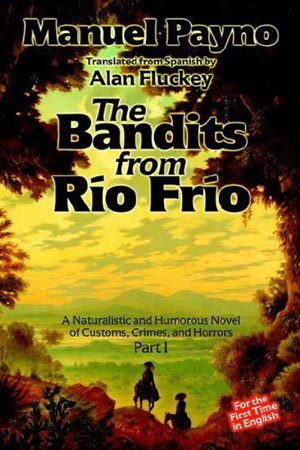
The Bandits from Rio Frio: A Naturalistic and Humorous novel of Customs, Crimes and Horrors

Manuel Payno's 19th century classic, The Bandits from Rio Frio: A Naturalistic and Humorous novel of Customs, Crimes and Horrors, has been translated for the first time into English by Alan Flukey (Heliographica Press, 2005). It would be fair to call Payno Mexico's Dickens. The Bandits from Rio Frio is a major work-- and the translation is superb. Read a review over at River Walk Journal Blog, and another at Eco Latino. This translation should have gotten a lot more attention than it has.

Saturday, November 18, 2006

Blurring Boundaries: A Conversation on the Art of Translation

Last night, I attended the closing event of the Festival of Contemporary Japanese Women Poets, a series of talks and readings presented by belladonna*, Poets House, and the Bowery Poetry Club. The conversation began as an exchange of ideas and questions between Alcalá, Sekiguchi and Swensen and continued with the audience Q&A. I was introduced to Sekiguchi's work on Wednesday but last night she elaborated further on her experiences in and thoughts on self-translation. Swensen, also a well-regarded poet, translated into English Sekiguchi's Japanese to English self-translations and has translated a number of French works, focusing in particular on cross-genres. She currently teaches at the University of Iowa. Her comments addressed the role and influence of translation on a poet's "original writing." ALTA veteran Rosa Alcalá, who teaches in a bilingual MFA program at the University of Texas, El Paso, opened the conversation with an observation on the creative potential of borders and boundaries: "While some boundaries are an invention, others are real. Placing ourselves on those boundaries can be productive." Ultimately, the poets seemed to agree that in writing and translation, one does not necessarily "blur boundaries" but rather acknowledge, embrace and inhabit them as sites of creativity and meaning.

You can read my notes of the discussion on my website (they were far too long to reproduce here!).

Friday, November 17, 2006

The Kommandant -- A Trilingual Reading of Les Bienveillantes

Right after the ALTA conference, two things happened. A big thick plop on my front porch from Amazon France containing Les Bienveillantes by Jonathan Littel, which has been the most discussed book of the summer in Western Europe it appears, and I, now the former host committee chair, got sick. The fact that I had to spend two weeks more or less resting up made opening Les Bienviellantes possible (894 pages is intimidating in any language), and once I started, I was hooked. The novel is unsettling, and extremely disturbing, but I was also disturbed in a linguistic way.
Now the Trilingual Reading languages: First, Jonathan Littel is an American writing in French. Not only does he write in French, he does it very well, and has won the 2006 Prix Goncourt (the French Pulitzer, so to speak). Second, the book is about a German, albeit with a French mother, which means that the world of the main character is already a "translation" from the German language and thought world into the French. And third, of course, is that the author and I share the same mother tongue, American English. There is a kind of perverse pride that one of "those Americans" has the ability to write a novel that can stand next to Victor Hugo without shame.
Now the story is jarring enough, even if one has read a great deal of Holocaust literature. Most of my reading in the field has been in German, and seeing events through the medium of the French language made the telling almost a Brechtian Verfremdungseffekt, distancing me as the reader from the experiences in which I already have extensive German vocabulary and knowledge. But this Verfremdungseffekt made the story even more ghastly, except for one little, little problem (no pun intended, actually. No really!).
German is a language of case, and English and French, with some exceptions in the pronoun arena, are not. Littel has chosen to use many German words and expressions in this work, der Kommandant being one of many, and I almost would have preferred to have the French. Why? Each time a German word was used with its nominative "the", in a place where the sentence has the word in what would be a direct or an indirect object, I was jerked right out of the story and into German 101 teaching assistent mode. Quite frankly, this is not my favorite persona. Nothing is misspelled nor are the words in the wrong context -- the use of the German vocabulary is flawless in all ways except for the case system problem. If I did not know German, I am sure that I would be captured by Littel's use of German for good effect, but the effect is lost when the case is wrong and the reader knows it. This could have been avoided entirely by using "le Kommandant" for example, which would make the case system discussion irrelevant. But "der" where "den" or "dem" should be used? If I were a cat, my fur is being rubbed the wrong way each and every time it happens. I wonder if this is my emotional way of distancing myself from the Arendtian "banality of evil" in the text itself, by letting myself be distracted by improper use of case. But I am distracted, in a red-pennish sort of way, and that makes me irritated, and then I wonder what the editor knew of German, or if Littel was aware of the case system but decided to ignore it, and then I am off into the kinds of tangents that sociolinguists tend to wander. What does the use of German mean? Why is Littel using this German expression here, but a French translation here? How many doctoral dissertations are going to be written on this?
Well, I did get better, and I am nearing the end of "Les Bienviellantes" (the title proposal for English is "The Kindly Ones" though I think that "Men of Good Will" would make a beautifully ironic title, though the title refers to the Furies in French.) If you know French, do try and read it, but I would put a disclaimer here as well, because at times you will find yourself in a position of voyeur to sadism and murder, and this reader often felt like a minor character found in the first hundred pages, who, when faced with the initial cruelty of the German invasion of the Ukraine, went completely insane. Under the circumstances, of course, perhaps he was the sanest of them all. As the protagonist keeps going through this "docu-roman", the horrors (and perversions) become a bit much, and this reader was glad to have been born far far away from the countries of my maternal ancestors.

Four From Japan: Contemporary Poetry & Essays by Women

As a follow-up to Liz's post on Wednesday's event at Poet's House, I wanted to share my first thoughts on the anthology Four From Japan: Contemporary Poetry & Essays by Women, which I have been rereading since that night. I am cross-posting this entry from my website, Stingy Kids. I also took some notes on the panel discussion but they are nowhere near as comprehensive as Liz's!

My post begins:

Belladonna*, Poets House, and the Bowery Poetry Club have organized a three-day festival on "contemporary and innovative" Japanese womens poetry. The impetus for this event is the recent publication of the anthology Four From Japan: Contemporary Poetry & Essays by Women (Litmus/Belladonna), which features the work of Kiriu Minashita, Kyon-Mi Park, Ryoko Sekiguchi, Takako Arai in English translation (most of the translations are by Sawako Nakayasu, editor of Factorial). I purchased a copy last night, the first night of the festival, and devoured most of it on my subway ride home. The translations are spectacular and I admire the decision to include the Japanese originals, even if doing so meant that fewer poems could be included. An essay by each poet follows the selection of poems and these provide a further glimpse into the different ways in which issues of idenitity, language, and representation have affected and shaped their individual work. These essays do some of the work that readers have come to expect from an introduction, but rather than have the translator and/or editor speak for the poets and "group" their work in collective terms, the anthology insists on a multiplicity of voices moving in and out of private and public positions.

I was interested in the decision to present the poems first in translation and follow these with the original Japanese text. I often prefer original and translation to face each other, but letting the translation "speak" first, as it were, is very provocative. I began my reading of these texts in a language that is known to me, even the language tricks and contortions they perform are familiar, so for a moment they belong to me: I can domesticate them, incorporate them, ingest them. I turn the page and, suddenly, I am facing another language and my grasp on these texts begins to slip away. But what also intrigued me is how the translations continued to shadow these originals so that they too could be "read" in a way but without the illusion of fluidity that facing translations encourage. Though this is a spare work, its reach is expansive and aspires "to seep [the work of these poets] out further into a universal poetic" while keeping their individual contexts in view. The prose texts, I would argue, are a defense against the risk of over generalizing and globalizing these works. They give us a glimpse into the influences and experiences that have shaped these authors and further elaborate their individual poetic interests and concerns.

Full volumes of translations of the individual poets are in order and I hope this collection inspires this future work, but last night's dialogue at Poets House also underscored the importance of gathering different voices together. As the conversation progressed it became clear that there were no easy categories in which to collectively position these writers. Even the category "women" found itself challenged and placed under scrutiny.

End of original post.

Since writing this, I've had the chance to read more attentively the poems and prose, particularly Kyong-Mi Park's essay "My Asian Bones are Ringing," which begins on a winter day in New York. The following passage is just stunning:
There's no such thing as your "own" language. Words that we call words all belong to others. To speak and write, and to learn and comprehend words--it is all a matter of giving yourself over to the process of other people's words as they come and go freely within you, and placing your own self atop the words of someone else. What I discovered through my own personal experience of translating Stein, the mother of modernism, was the spell-like quality of words, that language was in fact a medium--a spiritual medium as well as an intermediary--and that the act of using words is that of being possessed by the words of someone else.

(In this sense, it really makes no sense to speak of a "native" language. There is no language we are born with. Children are possessed, like a medium, by the language of whoever they first meet in their lives, and then copy and repeat this process, placing themselves atop it.)
During the panel discussion, Ryoko Sekiguchi told us that she is often asked, "why are you writing in French, Japan wasn't a colony of France?" Her reply: "The question becomes: what is wrong with engaging in a language to which you have no historical connection?" This brought up for me the issues surrounding the argument that translators should only translate into and out of languages they know intimately or to which they are legitimately bound by history. But history becomes a tricky prescription for writing and translation when you think of all of the unwritten contacts and encounters that have occurred between people and languages over time. Not to mention how much would be left untranslated if we only dealt in recent historical connections or with languages we know. Arguably, the act of translation creates these connections and this knowing.

Thursday, November 16, 2006

Four From Japan: discussion and reading at Poets House

Last night I went to an excellent panel and reading at Poets House in New York City: "Crossing Currents, Panel Discussion on Contemporary Poetry in Japan". In this panel, four women from Japan and their translator, Sawako Nakayasu, talked about poetry, gender, innovation, translation, and the history of the Japanese language.

I will be posting a full transcript of the panel on Composite within the next few days, but for now, here's a short version.

Throughout the panel and readings, Sawako provided excellent near-simultaneous translation! It was quite impressive.

Takako Arai talked about her identity as someone with deep ties to a textile manufacturing town near Tokyo. Kiriu Minashita explained the etymology of her pseudonym: "air current" or "jet stream". After the reading she gave me further detail; also, she has many, many pseudonyms and is a very bloggity internetty person with multiple identities. I can relate! Kyong-Mi Park talked about being of Korean/Japanese heritage and living in Tokyo being a 21st century woman poet. Ryoko Sekiguchi gave a brief introduction to her own identity as a Japanese poet writing in French, living in France, and translating French to Japanese and vice versa. The 5th panel participant lives in NYC and unfortunately I didn't catch her name; she was helping with translation and she's also a poet.

The panelists discussed gender, feminism, identity, sexuality, and concepts of women's language. Ryoko maintained that her identity changes and shifts with each new project. Kyong-Mi pointed out the problems with how, from the minute she began to write, other people told her to write from her position as Korean/Japanese. So that condition, that view, was imposed on her from outside. The process of dealing with that breaks down her identity in a way that leads to poetry. Takao described the history of her hometown and its disappearing economic base and how that affects her writing; her "home" in the process of disappearance. Kiriu talked about changing immigration laws in Japan, and Japan's history of attitudes towards "minorities" and the global history of monoculture and minority in a consumer society.

Rachel, the panel moderator, asked if resistance to monoculture drove poetic innovation and if the monoculture attitude made it difficult to be innovative or resistant as a woman?

In a word: Yes...

Kiriu and Takako talked at length about the history of Japan, and the ideal of monocultural, unified Japan and the Japanese language. Linguistic expections to that. Between the 17th century isolationism and around 100 years ago there were regional differences in Japanese. Takako uses those differences and digs up old words. Ryoko continued to describe the parts of her identity that don't change with different projects; that unchanging part is in resistance. One way to resist a monocultural language is to go backwards in time. Another is to focus on regional differences. Another is to be engaged with foreign languages.

Kyong-Mi then brought up the Pillow Book and the Tale of Genji, the Heiian era and women's language, women writers. For men to express particular poetic concepts they had to write in women's language and write as women. Japanese also has the richness of Rykyu (Okinawa) and Ainu heritages.

Ryoko said that breaking down and resisting monoculture was not always directed at a Japanese audience. People wonder why she writes in French when Japan was not a colony of France. She is deliberate in her choice to commit to an ahistorical connection to the language and the country. It is possible to work with a language without a personal or historical context of connection to it.

Kiriu brought up the "Beautiful Japanese Language" boom and the ways it's disturbing. Older poets, especially men, disapprove of poetic innovation and of changes in language. Women's universities are cutting gender studies classes and substituting "Beautiful Language" courses instead to teach "proper" Japaese, which she describes as teaching young women to speak like flight attendants on Japan Air; to cater to and please older men. Young people's use of language is a point of resistance to an attempt to close the doors to globalization. Japan has no military; when the economic situation deteriorates, those in power target the weak inside the country.

Rachel asked about "female language" or women's language and inhabiting different subject positions.

Ryoko and Kyong-Mi brought up Gertrude Stein and then Chika Sagawa and junzaburo Nishiwaki's descriptions of Sagawa. Kyong-Mi is a translator of Stein. All the panelists contributed to further discussion of shifting identities and the breakdown of language in relation to identity. "I am me because my reader knows me." [A re-work of Stein's "I am me because my little dog knows me." ) Taking that suspended state of being and language, often treated as a pretty or optimistic place, yet it is a dangerous, tenuous place. [Then, I think it was Ryoko who said that now their work in English in this context opens that place to a new set of readers, which changes the poetic identity of the authors and influences them. And this is part of being a 21st century poet, open to other poetries. ]

Kiriu made three points: "Instinct" and her experience of 9/11.To people in Japan, New York City is the city always demolished in Hollywood movies, just as in the U.S. people think of Tokyo as the city demolished by Godzilla. So the actual destruction of the WTC was a shock of reality overtaking the imaginary. 2nd: Her identity growing up in a stereotypical affluent suburb. "I feel like I'm a mass produced product, a part made in a Toyota factory. When I see Agent Smith in The Matrix, it reminds me of myself. The fact that I don't have a locality is my identity". 3rd: Further explanations of her pen names. Her identities in other genres, where people have no idea she is also a poet. The pleasure of disguise.

Then each poet read from the book, which has poems in Japanese, translations, and some very interesting essays on poetry. (Though I'm sad that the book doesn't have Kyong-Mi Park's amazing poem "The cat comes with a baby cat in its mouth" with its memorable images of the disturbing brocaded caterpillar, fat-veined leaf, sound of peeing, and muslin nightgowns.) I highly recommend this books, even if you don't know Japanese (as I don't): Four From Japan: Contemporary Poetry & Essays by Women -- available from Small Press Distribution.

I also recommend anyone who's in NYC try to catch the readings and book release party tonight, Thursday Nov. 16, at the Bowery Poetry Club, 308 Bowery, 7pm, or the reading and discussion tomorrow night, Friday Nov. 17 at 7pm at Poets House: "Blurring Boundaries: A Conversation on the Art of Translation with Rosa Alcalá, Ryoko Sekiguchi, and Cole Swenson. I'll be at the Friday event but not Thursday: Thursday I'm going to Words Without Borders "Axis of Evil" reading at Labyrinth Books!

Thanks to Poets House and Belladonna for this amazing discussion and reading!

My "summary" is very long! I hope it's interesting to you all.

Monday, November 13, 2006

Literature from the "Axis of Evil"

Words Without Borders has a first print anthology, Literature from the "Axis of Evil." Check out these launch events:

--> ­in New York on November 16 at 7 p.m., at Labyrinth Books, 36 West 112th Street. Readers for the evening include Francisco Goldman, Esther Allen, Diana Alvarez-Amell, and Suji Kwock Kim.

--­> in San Francisco on November 29 from 6-8 p.m., at the San Francisco Main Library Auditorium, 100 Larkin St. at Grove St., Civic Center. Alice Walker, Persis Karim, Lea Aschkenas, Kareem James Abu-Zeid and Li Miao Lovett will read and discuss work from the anthology.

Tuesday, November 07, 2006

Oulipo, catachresis, right and wrong

Phyllis Aronoff sent me this interesting article for the ALTA blog, a talk entitled "Translation and the Oulipo: The Case of the Persevering Maltese," by Harry Mathews. It's about "sound translations", like Marcel Benabou's transformation of "A thing of beauty is a joy forever":

Ah, singe débotté,
Hisse un jouet fort et vert
------------------
"O unshod monkey,
raise a stout green toy!"


Phyllis further quotes Mathews: "The Oulipo certainly can't help [translators] in an obvious way. Unless he wanted to sabotage his employer, an editor would be mad to employ an Oulipian as a translator." And then he shows how Oulipo might help a translator in less-obvious ways.


This all reminds me (Liz) of Frankfurt's famous essay "On Bullshit". I do like the accidents that engender new accidents, and catachrestic eruptions, but I don't think I would call them translations. I was near fatally annoyed in a class a couple of years ago by a person who claimed that, since she only had a small inadequate dictionary and didn't know Greek, she could just "pick the word that came before or after the word she was looking up" and use it for a "valid" translation. And that was okay, because that was her level of understanding, her creative filter, and made perfectly good art. While I love the idea of multiple truths, multiple translations, Oulipian game-playing, and a bit of out-of-control chaos; the idea that there might be no RIGHT translation --- I do believe there are WRONG translations.

Monday, October 30, 2006

Multilingual dictionary, good for idioms

I just stumbled across this excellent, free, online resource: Wordreference.com, which searches across English, French, Italian, and Portuguese all once, and optionally from any of those languages to nearly any of the others. How incredibly useful!

It's very good with idiomatic expressions. For example, take a look at the entry for cabeza. You get a huge list of expressions using the word, with links to other entries in the dictionaries that contain it. You can hear the word spoken if you click on the icon for the sound file.

If you use Firefox you can also click a link near the bottom of the page to add a Wordreference search box to your toolbar.

There are forums to ask questions, too, and a list down the left sidebar of words nearby in the dictionary so you can browse.

Friday, October 27, 2006

ALTA Conference -- The Host Chair's View Part Two

This conference was filled with so much activity that I am still trying to take it all in. As Host Committee Chair, I was constantly on the move, directing people hither and yon, welcoming people, making sure that people found the coffee, the room, the keynote speakers. I left off the last posting half-way through the conference activities I attended, and so will pick up in the middle of Friday afternoon.

I attended the talk "Reading and Writing Chinese" where there was much conversation around the use of the computer in learning to read as well as discussion on using the computer for composing written documents. I was happy to hear Geoff Waters recommend the Unicode Unified Han pages, which can be found on-line at Unicode.org, since my husband has devoted so much of his life to the Unicode Standard.

Many of us filed in to hear the guest speaker Joseph Butwin give an interesting talk on how his parents became Yiddish translators, and it was beshert that they ended up translating Sholem Aleichem. Fate, or the Heavens, does seem to play a role in translators falling into the profession, and his description won nods of recognition from the audience.

Niloufar Talebi gave a beautiful rendition of contemporary Iranian poetry with the help of two musicians who drove up from Portland. It was a moving, heart-felt and amazing evening of music and recitation. If you weren't there, you missed a wonderful evening. (Let's just say that the musicians made brisk sales of their CD afterwards -- I think they sold out their stock! I bought three of them, one for me and two for friends).

Saturday October 21

After the ALTA breakfast, I headed out to the Danish, Norwegian and Icelandic Voices for the American Reader panel. Ingrid Lansford moderated a panel with Tara Chase (Norwegian) Randi Eldvik (Old Icelandic) and Thom Satterlee (Danish). The discussion grew lively and heated (again, you just think we Scandinavians are cold fish. HA!) One theme that came up was the difficulty in convincing Scandinavians that American English is good enough, compared to British English. As Tara Chase pointed out, "If you want to sell to an American audience, why not translate into American English? There are now 300 million of us and only 60 million of them." Randi Eldvik thought that it should not be a problem, since educated Americans do read British English and watch Public Television, and that the American audience need not and perhaps should not demand translations into American English. I pointed out the fact that American translators can lose work to British translators, due to this prejudice, and that eating is also a very nice thing to do (with example of lost book). Which is better, a real American translation or a "Mid-Atlantic" translation? I noted that the British translators had no qualms about using Britishisms and that we Americans had just as much right to our English as the Brits do. I also told the story of the discussion Niklas Rådström and I had concerning the bird blue titmouse, to much laughter. The question becomes "who do we translate for" -- the English-speaking world as a whole, Americans, to please the Scandinavian authors, who do like to put in their own two cents using dictionaries biased towards British English to butress their arguments? It is a unique problem that Scandinavians do know quite a bit of English, and therefore often have opinions about the translation of their work, which can be quite misguided. We would have kept going, but we were kicked out of the room.

From Scandinavia back to Asia, where I listened to a fascinating panel on the Prose Poem in East Asia. Brian Clements, publisher of Sentence, the prose poem journal, put together a wonderful selection of panelists: Jeffrey Angles, Steve Bradbury, Don Mee Choi (together with the poet she translates Kim Hyesoon) and Andrea Lingenfelder. I was brought up to speed on the history of the prose poem in Asia, and the changes in page layout which made the prose poem possible in Chinese, Japanese and Korean. The prose poem is a new development in Asia, and exciting things are happening as poets work with this, for them, new mode of expression. All of these translators are beyond excellent -- BUY THEIR TRANSLATIONS, you will not regret it. Or look for the upcoming Asian prose poem feature in Sentence.

Since I wear another hat as Secretary-Treasurer of the Association of Swedish Translators in North America (STiNA), I had to leave Asia and go find out practical information that could be of use to STiNA members. That is to say, I went to hear all about Awards, Grants and Funding, and took notes so that I could inform the STiNA membership of upcoming deadlines and requirements for various grants. From this panel, I went to ALTA and the World, where the various translation organizations met to discuss mutual projects and working together to benefit translators around the world. I learned, and I did not know this, that ALTA is a member of the international translator's organization FIT, and that we as ALTA members can get an international translator's identification, which has similar privledges to an international journalist ID. See the FIT website for more information on the international translators ID.

By the time keynote speaker Ch'oe Yun was on stage, I was finding myself feeling a bit dizzy, so I was gripping my seat to keep myself from fainting and making a scene, but in spite of this distraction, I found what Ch'oe Yun said (with Bruce Fulton's translation) a fascinating insight into the contact between Korean and French, and the problems associated when two such different languages meet in the translator's mind and on the translated page.

I was beginning to feel ill and debated whether or not to just call my husband to take me home, but decided that I would attend the Declamacion, since that is the highlight of an ALTA event for me! I love to hear people reciting and singing, and the evening is always filled with laughter and good times. This was my fourth ALTA and hence my third Declamacion (I sat the first one out because I didn't realize that it was in languages other than Spanish), and I also led the group to a rousing chorus of Helan går! So now many dozens of ALTA members can sing one drinking song with the best of the Swedes, which, if you ever win a Nobel Prize yourself, may come in handy. (And special thanks to Liz Henry for "straightening out my bosum" ie, making sure that my folkdräkt and I could be seen in public!)

The words to Helan går:

Helan går nu hopp fa la ra la fa la ley!
Helan går nu hopp fa la ra la ley!
Den som inte helan tar
inte heller halvan får
Helan GÅR (pause to drink)
Nu hopp fa la ra la ley!

A fine conclusion to a good conference.
See you in Dallas! And practice your Swedish drinking song for next year!

Your (now FORMER) Host Committee Chair Laura

Wednesday, October 25, 2006

ALTA Conference -- The Host Chair's View Part One

As the Host Committee Chair, first and foremost I would like to thank everyone who participated in the ALTA conference. We had 179 presenters, making for a rich and varied conference, and, again, I thank you.

Now, the summary from the perspective of the Host Chair!

The conference began for me when I drove to Sea-Tac in order to pick up our keynote speaker Göran Malmqvist, who, as a member of the Swedish Academy (the Nobel prize committee guys and gals -- two new members of the Committee were just installed two weeks ago, so I think we will see some interesting developments from Stockholm), and as a translator of Chinese and erudite on all things literary, was a good choice for one of our keynotes. Göran himself is a modest and pleasant man, and, as we relaxed at our house for a few hours before heading to the hotel, he and my husband Asmus, who is one of the authors of the Unicode standard, became immersed in discussing Chinese characters which need to be added to software. Göran had arrived from Taipai, and so went straight to his room to recover, while I milled about, welcoming translators, authors and others who were arriving for the first evening of the conference.

For the welcoming event, I dressed in my Southern Swedish folkdräkt, which hails from the western side of the province of Blekinge. John Balcom wondered why my dräkt had a silk bodice, and I reminded him that the area of Sweden from which I hail has had trade with China for hundreds of years, and Chinese silk is part of the component of the Blekingedräkt. To open the confrence, the local Swedish vocal group Sus gave a short performance of Swedish folk songs, medieval ballads and even one Sami joik, the songs sung by the reindeer-herding people up North, often called Lapps here, but I would like to inform you all that Lapp is a derogatory word in Sweden and Sami is the prefered name. After some drinking and mingling, the opening event continued with Olivia Sears' self-cell poetry multimedia performance. Her work is thought-provoking, rooted in both scientific and human questions of origin and identity. A powerful and moving celebration of the complexity of our bodies and the mystery of our being. From there, many attendees moved to the bar, and I was able to greet Dwayne from Absinthe, who had published one of my translations this past year, and an all-around great guy.

Thursday, October 19th, bright and early, I trooped in to the Scandinavian workshop, where Thor Truelson led the participants through short pieces in Swedish, Norwegian, Icelandic and Danish. The Scandinavian languages (excepting Finnish, which is Finno-Ugric and not Indo-European) are all closely related, and to some extent, mutually intelligable. Few translators had attended a workshop like this before, due to the fact that Scandinavian translation workshops are few and hard to come by in North America, but Thor led everyone through the process, and by the end of the workshop, people felt comfortable to speak out and discuss translation problems and opinions on the translation process. Göran was also in attendance, but was quite modest and participated just like the rest of us Scandinavian translators. Thor is translating an Icelandic saga, and we were grateful that he had already translated his piece, since Icelandic is unique among the Scandinavian languages due to its retention of forms which, for the rest of us, are historic and difficult.

Like Liz, I also attended the Collaborative Translation panel, led by Kelly Lenox Allen, which I enjoyed tremendously. As some of you know, I have a friend who is a Latvian poet, and she has asked me to work with some of her poems, via her rough translation and a poetic translation in French, so I wanted to hear how other people had managed to come to terms with the process and to work together successfully, and these translators seem to manage this through mutual respect and a great deal of humor.

Lunch was a meeting of the Association of Swedish Translators in North America, and a number of STiNA members were at the conference, most for the first time. Even our humble president, Paul Norlen, an award-winning translator from Swedish, was an ALTA newbie. Göran Malmqvist appeared at this lunch as well, and was able to relax among the Swedish translators. It was a good lunch and a good chance to mingle and catch up with what our partners in Swedish translation were doing these days.

Avoiding the Missionary Position is a pun, as those of you who attended the panel are now aware. Mike Farmen led a discussion on the various periods of Chinese erotic poetry and the rise and fall and rise of erotic modes, as well as bringing the audience a new insight into symbolic metaphors -- I will never read the phrase "clouds and rain" in the same way again. John Balcom, Teresa Yu, David Lunde and Geoff Waters are all accomplished translators of Chinese poetry, and hearing their translations (as opposed to just reading them) was a joy.

The ALTA Fellows Reading went smoothly, except for the part that a conference host dreads, the person who misses the plane. Oh well, can't be helped. The Fellows were introduced at the beginning of the reading, and for those of you who missed that, there was a hand-out brochure in the program which listed all five fellows and their work.

I introduced our first keynote speaker, Göran Malmqvist, and I have to say that I am amazed by his insights, erudition and humor. Of course, you don't get to be one of the members of the Swedish Academy if you are an idiot, so his wide range of knowledge on the literatures of the world should come as no surprise. What did come as a surprise to me is the number of ALTA members who did not (prior to this conference) know that the Swedish Academy was the institution responsible for choosing the Nobel prize. OK, repeat after me, the Swedish Academy chooses the winner of the Nobel Prize for Literature, the Swedish Academy...now you know.

Friday October 20th

The panel on contemporary Swedish and Finnish Literature was moderated by yours truly. Moderating of course mostly means cutting people off if they have gone on beyond their time and leading the discussion afterwards, so I heartily recommend being a moderator, as it is much more fun than being a presentor. This is the first time I actually moderated an ALTA panel myself, though I have done the moderator thing once or twice before at the annual meeting of the Society for the Advancement of Scandinavian Studies. Erland G. Anderson discussed his translations of Ulf Peter Hallberg, and the importance of soccer in Hallberg's work. Johannes Göransson discussed his work with Aase Berg and the interesting challenges that arise both in her Swedish and then in translating her Swedish. Jill Timbers discussed Finnish literature, and for many of us, the authors that she was introducing were not well-known. Her introduction made us all want to run out and find the Swedish translations of these Finnish works, since very few of these works have appeared in English. The discussion became quite heated (you just thought that Scandinavians were cold fish!) around the issues of standard language, language contact and racism and discrimination. Finally we had to terminate the discussion, but blood pressure was raised and we were all challanged in our understanding of contemporary Scandinavian and American societies.

Bilingual readings, which Alexis Levitin has been arranging for the past twenty-odd years, are a highlight of any ALTA conference, and the Scandivaian reading was no exception. One highlight of the Scandinavian reading was Gudrun Brunot's performance of a poem by Anna Maria Lenngren, first in Swedish and then in English. Her presentation was remarkable, and as she is new to the field of literary translation, we encouraged her to enter the American-Scandinavian Foundation's Translation Prize. Roger Greenwald, a long-time ALTA translator, began the reading with his translations of Niels Frank, Adda Djörup and Catherine Giröndahl (excuse me for using the Swedish ö instead of the Norwegian o with slash -- the sound is idenical for those who are not familiar with the pronunciation of Scandinavian languages). Eva Claesson read from excerpts from her forthcoming collection of ten Swedish women poets (Oyster Press). Margareta Horiba read from her translation of Hjalmar Bergman (one of Sweden's foremost dramatists and novelists, he died in 1933. An aside, my honors thesis at University of Illinois was on Hjalmar Bergman's plays). Thom Satterlee read from his translations of Danish poets Henrik Nordbrandt and Annemette Kure Andersen, and even brought in a CD of the elusive Henrik Nordbrandt reading one of his poems. Sonia Wichman finished the reading with her translation of Finnish children's author Leena Krohn, whose short story on a town bought up house by house to be turned into a museum for one rich man's life was a compelling study of loss and memory and what is truly important.

Monday, October 23, 2006

Conference reports from Sweden and Seattle

Here's Johannes Görannson of Exoskeleton, reporting on his experience of the ALTA conference. He wrote about Korean translators and translation and about meeting Quick, go read it just to see if he mentioned you! (Oh. Wait. Correction: He's in Georgia, or maybe Alabama... he's in an indeterminate location. With a cat, until you open the box.)

Richard Jeffrey Newman posted on poetics blogThe Great American Pinup and It's All Connected, in excellent detail. He wrote about the average age of translators represented at the conference and would like to see more younger translators.

I agree! In fact, I stood up at the ALTA general meeting with some practical suggestions of how to make the conference more welcoming and relevant & interesting to younger translators:

- more roundtable discussions
- more workshops
- peer mentoring, structures to encourage it
- regular old mentoring, ditto
- funding for younger people and/or people at beginning career stages and/or freelancers who aren't associated with a university
- spontaneous programming, unconference style
- more transparency in the panel organizing process

Anyway, Richard also wrote in fascinating detail on the "Translating the Erotic Mode in Persian Poetry" panel:
To the degree that sex is about the body, the way we talk about sex is a way of talking about what bodies are for in a very literal sense. So, for example, if we talk about sex as being only or primarily about reproduction, bodies are there to reproduce and to be reproduced. While if we talk about sex as being about enjoyment, then bodies are there to be enjoyed. It would be fascinating to push this consideration of how to translate the eroticism of one language/culture into another into a consideration of the cultural construction of the body in each culture, to get at an even deeper level of significance.


The Mandarin also had a few things to say about the "clouds and rain" of Seattle. I look forward to reading what he has to say about his panel on sexual themes in classical Chinese poetry. We translators are a racy bunch!

How did I know they were blogging about the conference? Because I'm tapped into the great hive mind, that's how, and because I technorati-ed "literary translator" on the main blog search engine.

Saturday, October 21, 2006

Bilingual reading - Misc. - Saturday afternoon

Elizabeth Lowe read from her translation of the Brazilian writer Regina Rheda, author of Ark without Noah, "The Bad Neighbor". There is a UT Press collection of her works, "First World, Third Class". She read from "Bestseller", with strong themes of globalization - ecofeminist, immigration, diaspora - wordplay. I loved this story, which was obnoxious, bitter, funny, disturbing, & surreal!

Liz Henry (me) - Elvira Hernandez and Carmen Berenguer. I read from my translations of "Carta de Viaje", "Bala humanitaria", "Moluska", "A media luz", and "Lengua osa verba". That was a lot of fun. I'm having a blast reading and translating Berenguer, who is bold and outrageous and untranslatable.

Graciela Lucero-Hammer read from her translation of Desnudos del alma, by Marisa Estelrich, who unfortunately could not be here - (Alicia Zavala Galvan read the Spanish). A funny and compelling story from the point of view of a woman who is very annoyed at the nosy manager of her apartment building...

Philip Metres, reading from Sergey Gandlevsky , "A Kindred Orphanhood". A poem inspired by folksongs learned in prison. How people come back from prison all around the world with new language. "A gutter lisping to itself .... a song about wasted life... I'm not particular... a swallow of alcohol is like a hot rose unfolding in your chest. " Wow!

Philip Metres also read several poems by Lev Rubenstein, "The postmodern Chekov." - "Catalogue of Comedic Novelties". A poem called "Here I am" :

"Here I am / there is no other/ this is the only /this is the only /there is no other / well if I'd known it was going to be like this...!" Radical and cool. Subtle ambiguities of everyday thoughts, distressing yet unavoidable uncertainties, strongly expressed. The sort of thing you can be thinking about without being able to stop - but unable to explain what it is that you're thinking. Poetry about exactly that.

Le Pham Le and Nancy Arbuthnot sang and read Le's beautiful poems. I think they were scheduled at a different time, so not a lot of people knew that they were performing at 5pm -- which was too bad because a lot of people were looking forward to hearing their work. Le improvises melodies to the poems. I don't know anything about the rules of the poetic form or of the melodic improvisation but it's clearly part of a long aesthetic tradition. I will just add a few links here for anyone who wants to pursue more information: Ca Dao Viet Nam: Vietnamese Folk Poetry by John Balaban; Versification of Vietnamese Riddles; Traditional Music of Vietnam: Art Songs, Poetry.